Cases / 01 · 3D city kart
Should the kart
use the skill?
The short answer: yes, if the race is the product. No, if the race is a physics test. One brief, two loops, same model, same single-file constraint. The no-skill build is already a complete game. The skill build is a more finished one.
The verdict in one paragraph
The control build, Sundown Circuit, is 890 KB and already fun: three laps, six karts, a city loop, drift and nitro. It also has a thin shell. The skill build, Sunset District, is 1.58 MB and adds settings, save, touch, an objective chain, five rivals, a four-lap structure, a wet-road reflection system and a title screen that reads as key art.
That is a product difference, not a rendering difference. If you are shipping the race to other people, the skill earns its rounds. If you are testing whether a kart can drift, skip it: the control got there without the gates.
01The same brief
Two loops,
one prompt.
Both runs used DeepSeek V4.1 Flash, a single self-contained HTML file and no external images, models or audio. The only intended variable was the harness: the procedure plus its gates.
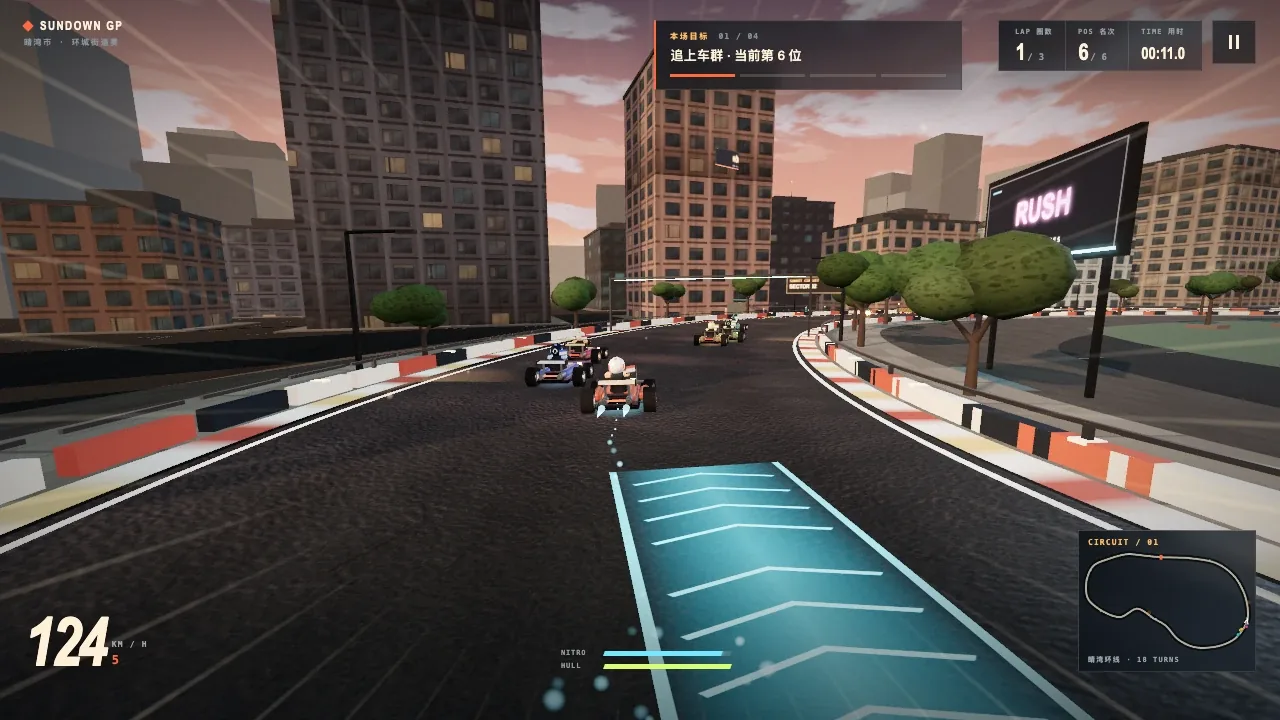
A / no skill
Sundown Circuit
3 laps · 860 m · 18 turns · 6 karts · 890 KB
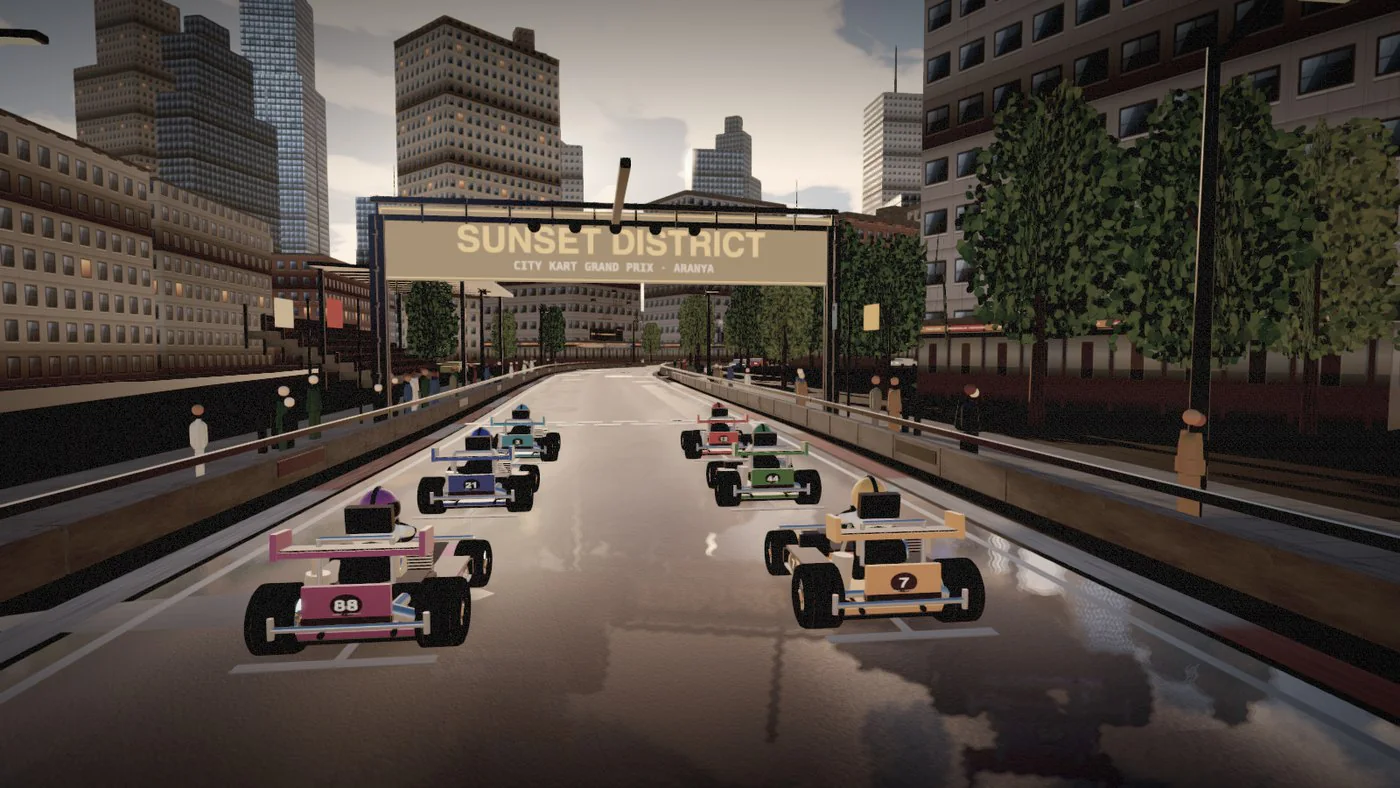
B / with the skill
Sunset District
4 laps · 0.49 km · 5 rivals · 636 draw calls · 1.58 MB
| Dimension | A / Sundown Circuit | B / Sunset District |
|---|---|---|
| Harness | none | skill + eight gates |
| File size | 889,961 B | 1,577,115 B |
| Race | 3 laps · 860 m · 18 turns | 4 laps · 0.49 km · 10 turns |
| Rivals | 5 AI karts | 5 AI karts, named, with catch-up |
| Shell | Title, pause, win/lose, touch | Title, settings, pause, save, win/lose, touch, quality presets |
| Signature surface | Wet-look road, no planar reflection | Wet asphalt + half-res planar reflection + puddle mask |
| World | City loop, props, crowd | 100+ city blocks, 2 landmarks, 20 prop families, 435 meshes / 759 instances |
| Acceptance | — | 8/8 gates · product, mobile, census, lights, playtest, look |
Numbers from the shipped files and the project gate output.DeepSeek V4.1 Flash / 2026-11
02What the skill changed
The lap was already there.
The product wasn't.
The control proves the model can already build a racing loop. The skill did not teach it to drift. It made the shell, the content budget and the surface system non-optional.
01 / SHELL
Six screens, one save file.
The skill build treats the title as key art: HUD hidden, premise, start, settings, controls and best run. Settings persist. Touch is reachable at 390×844. The control has a title and a pause; the skill build has a product.
product gate · mobile gate02 / CONTENT
An objective chain, not a lap counter.
Four laps, five rivals, cone hazards on the racing line, boost pads, damage and repair, a live classification and a podium condition. The loop has a shape: catch up, hold the line, survive the clock.
content budget03 / SIGNATURE SURFACE
The road is a system.
Wet asphalt is not one roughness value. It is an albedo/roughness/normal set, gutter and tyre-rut wetness, separate puddles, clearcoat and a half-resolution planar reflection injected into the road material — quality-gated, not free.
look + performance budgets04 / GATES
What turned red.
Product caught the missing shell. Mobile caught touch reachability. Census caught low-segment geometry at close range. The stock collision gate assumes a walkable rectangle, so the racing contract was re-expressed as barrier push, wall clamp and track containment.
census · collide · playtest03The cost
It is not free,
and it is not automatic.
The skill build is 77% larger, took more rounds and added systems that the control did not need. It is a more finished product, not necessarily a more fun prototype.
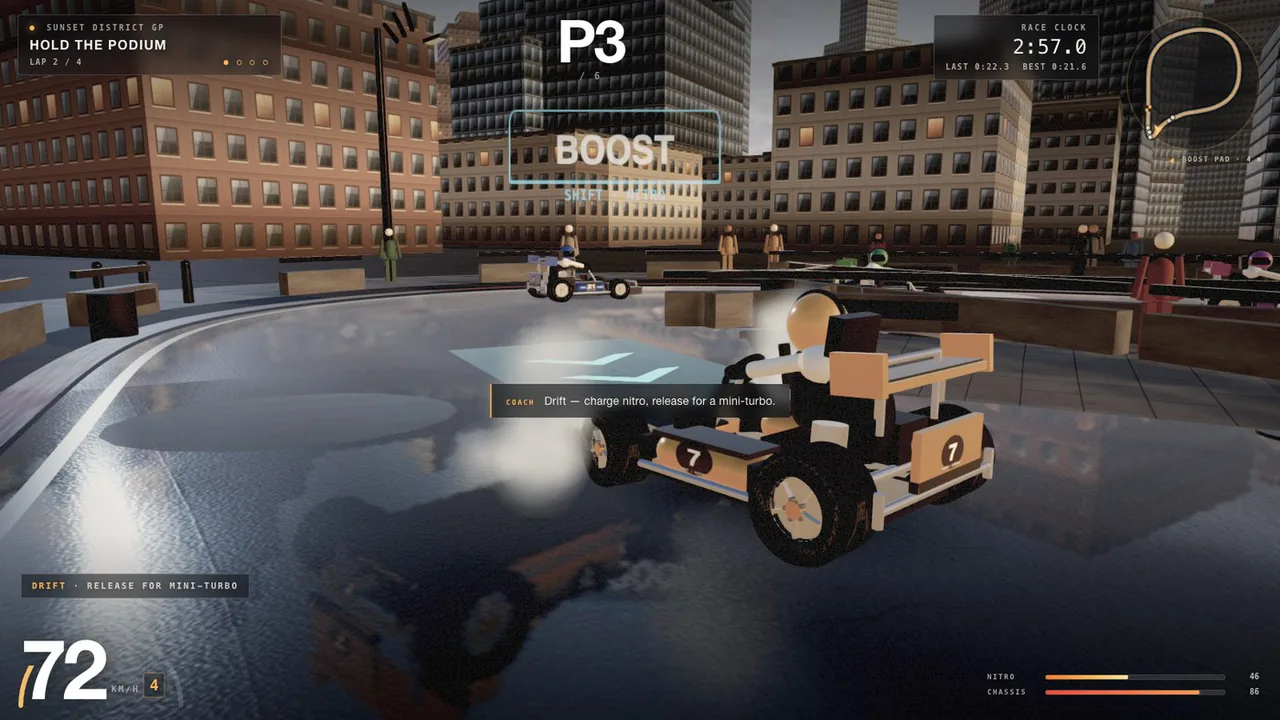
The skill buys the last 20% that makes it a product.
If the race is already fun at 890 KB, the extra 687 KB is not a rendering upgrade. It is a shell, a content budget, a surface system and a gate log. That is worth it when someone else will download the game; it is waste when you are testing a drift model.
The control also has something the skill build can lose: speed of iteration. A smaller file with fewer systems is easier to change. The skill's product-first order protects the player's first minute, but it does not make the core loop better.
04From draft to product
The title changed
because the shell did.
The early build had the race. The final build had a title screen that could sell it. The difference is not a filter; it is hierarchy, a premise line, a start action and a saved best.
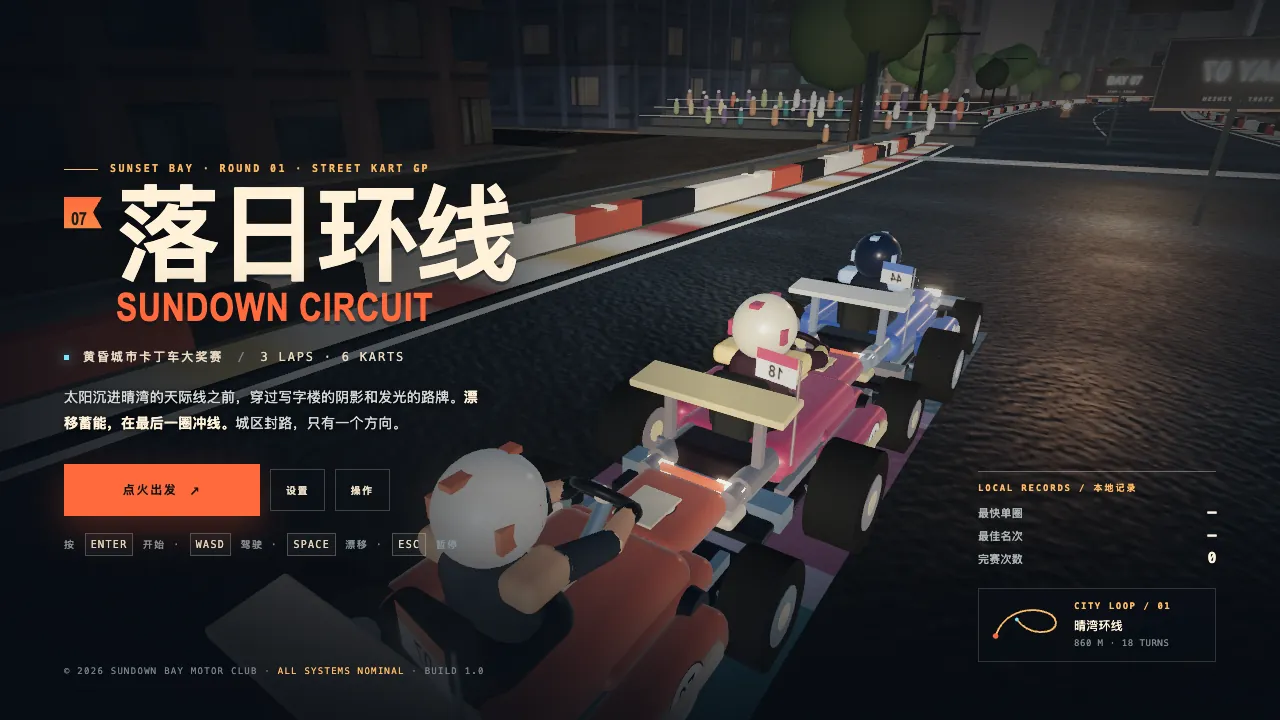
EARLY / functional
The race exists. The first frame does not yet argue for it.
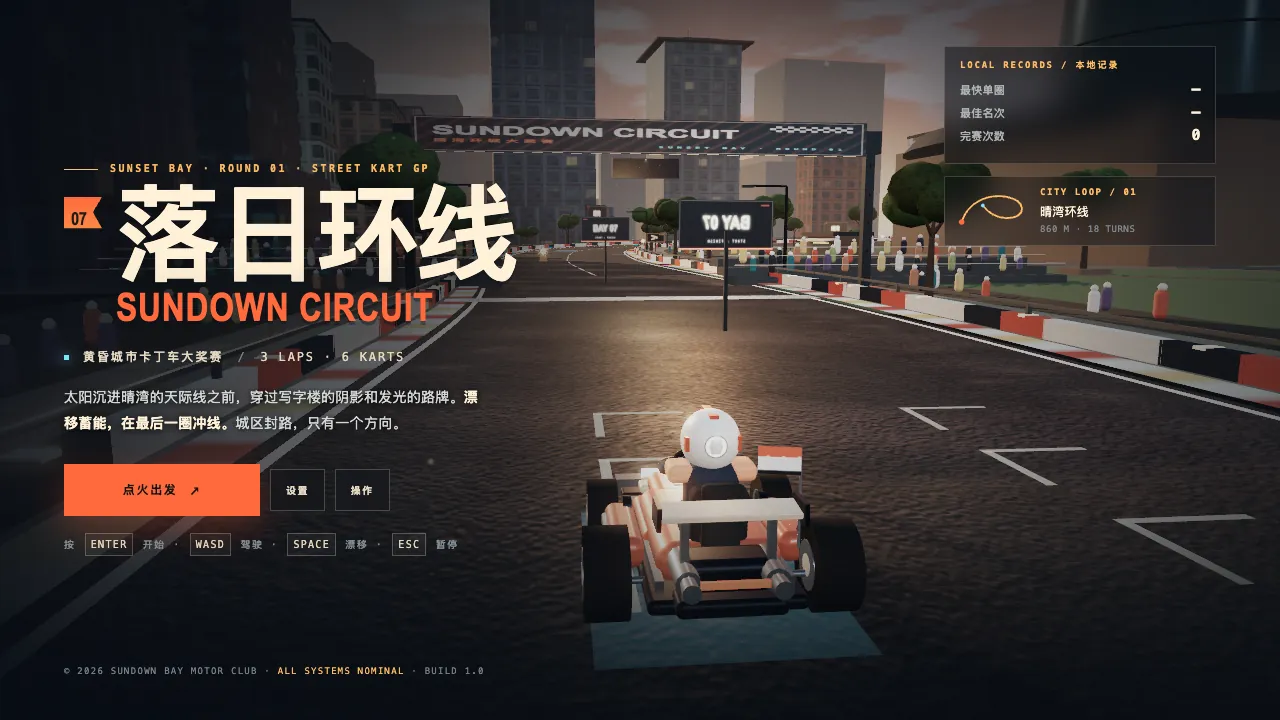
FINAL / key art
Title, premise, start, controls and best run over the live scene.
05The gate log
What "finished"
was allowed to mean.
The gate list is the argument. The racing-specific collision and playtest contracts were adapted for a continuous barrier corridor; the stock walkable-rectangle assumptions do not transfer.
shadersNo compile/link errorPASScensus435 meshes / 759 instances, 0 failuresPASScollideBarrier push, wall clamp, track containment (adapted)PASSlights4 lights, all anchoredPASSplaytest31/31 racing checks (adapted)PASSproductShell, content, save, touch, budgetsPASSmobile390×844, touch, no overflowPASSlookTone/emptiness fallback; flat 0% heroPASSdraw calls 636
triangles 539,883
lights 4
meshes 435
instances 759
size 1,577,115 B
network 0 requests
# the output that mattered
product PASS
mobile PASS
census PASS
lights PASS
playtest PASS (31/31 adapted)
look PASS (fallback)
The look gate used the declared fallback because the project deliberately did not use an external photographic reference. That is stated, not hidden.
06Verdict
Use it when,
skip it when.
The same rule applies to any genre: the skill protects the player's first minute and the reviewer's ability to check the build. It does not make the core verb fun.
USE IT
You are shipping the race.
Other people will download it, play it on a phone, change settings and come back. The title has to work. The save has to persist. The gates earn their keep.
product · mobile · saveSKIP IT
You are testing a drift model.
One track, one kart, no shell, no save. The control build got there without the gates and is easier to change. Do not pay for a product layer you are not shipping.
prototype · physics · look testADAPT IT
The collision contract is genre-specific.
A racing circuit is a continuous barrier corridor, not a walkable rectangle. Re-express the contract on the page: barrier push, wall clamp, containment and progress. The gate should run on an unrelated subject; the page's test plan changes.
collide · playtestPlay both sides
The control and the product are one click apart.
Read next
The shooter case.
Saltline is the reference. Neon Breach is the no-skill control. Ironsight is the green-but-thin first skill run. Black Ice is the second generation: 318 KB, 8/8, four roles and a boss.