Cases / 02 · 3D shooter
Should the shooter
use the skill?
The hard case. Yes — with a product-first budget and an explicit art direction. The first skill run passed every gate it had and still felt like a demo. The second made the product a gate and became a 318 KB game. The shooter is where the harness earns its keep, and where its defaults can betray you.
The verdict in one paragraph
Shooters benefit most from the product layer and suffer most from the look loop. A frame with one enemy and one weapon can pass a look gate and still be a demo; a stylized arena with five waves and a boss can feel more finished than a photoreal corridor. The skill is worth it when you accept the product budget up front, choose the art direction deliberately, and refuse to let the look score eat the content.
Black Ice is the evidence: 318 KB, 8/8 gates, four hostile roles, a boss, two tools, settings, save, touch, and a 6–10 minute run. It is not Saltline. It is the same production discipline at a fraction of the model cost.
01The reference
1.4 MB was never
the target.
Saltline is the reason this project exists. It is also not a fair baseline for a cheap model: a strong model, a narrow scene, about eight hours and a reported ~$550 API bill. The useful question is what kind of production discipline produced it.
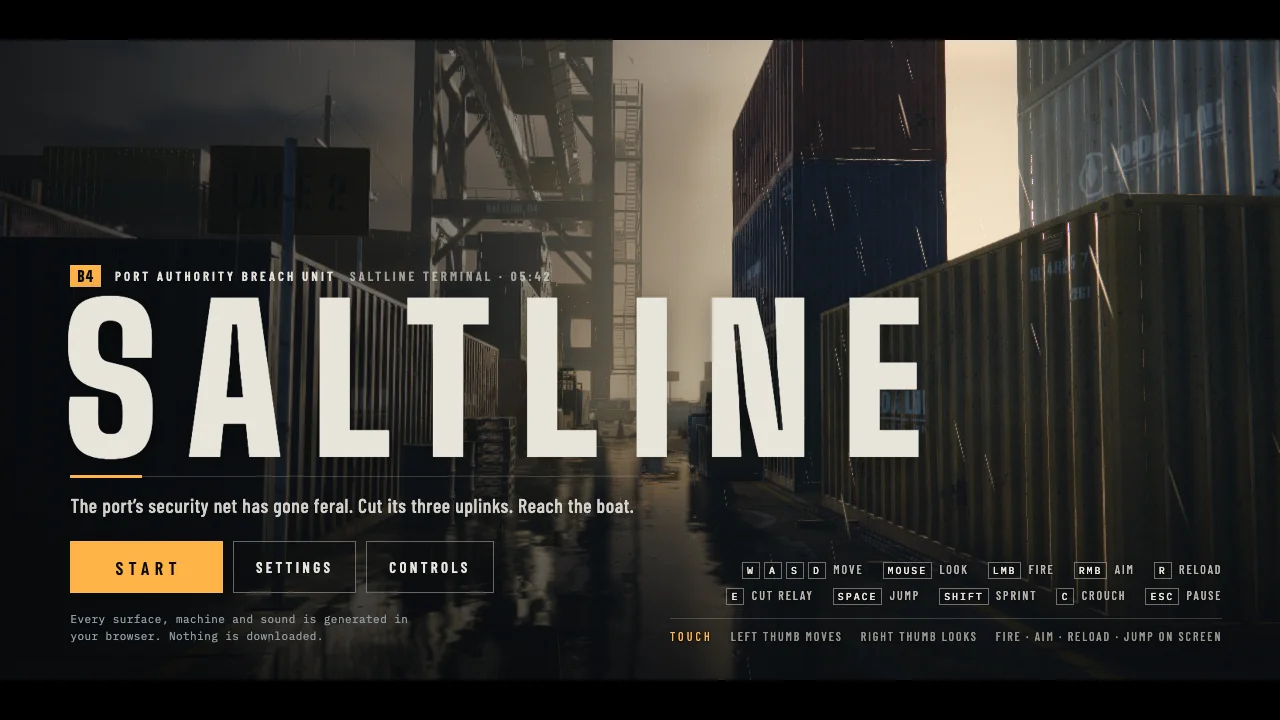
WHAT IT PROVES
A model can write the generator.
Geometry kit, surface functions, lighting, animation solvers, synthesized audio and self-tests. The content is a function, not a file. That is the production shift worth learning.
WHAT IT DOES NOT PROVE
That 1.4 MB is AAA.
One map, a few enemies, simple AI, no narrative density, no long progression, no certification. The $550 is an API bill; it does not include human taste or review.
WHY IT IS HARD TO MATCH
The look is a chain of decisions.
One light story, a wet signature surface, a narrow time of day, a coherent palette. A cheap model can copy the checklist and still miss the chain unless the gates make the chain visible.
02The first skill run
Green gates.
A thin game.
Ironsight passed 6/6: shaders, census, collision, lights, playtest, look. It scored 0.87 against its reference profile. It also had one enemy role, one weapon, no settings, no save, no touch path, and a title card that leaked the HUD.
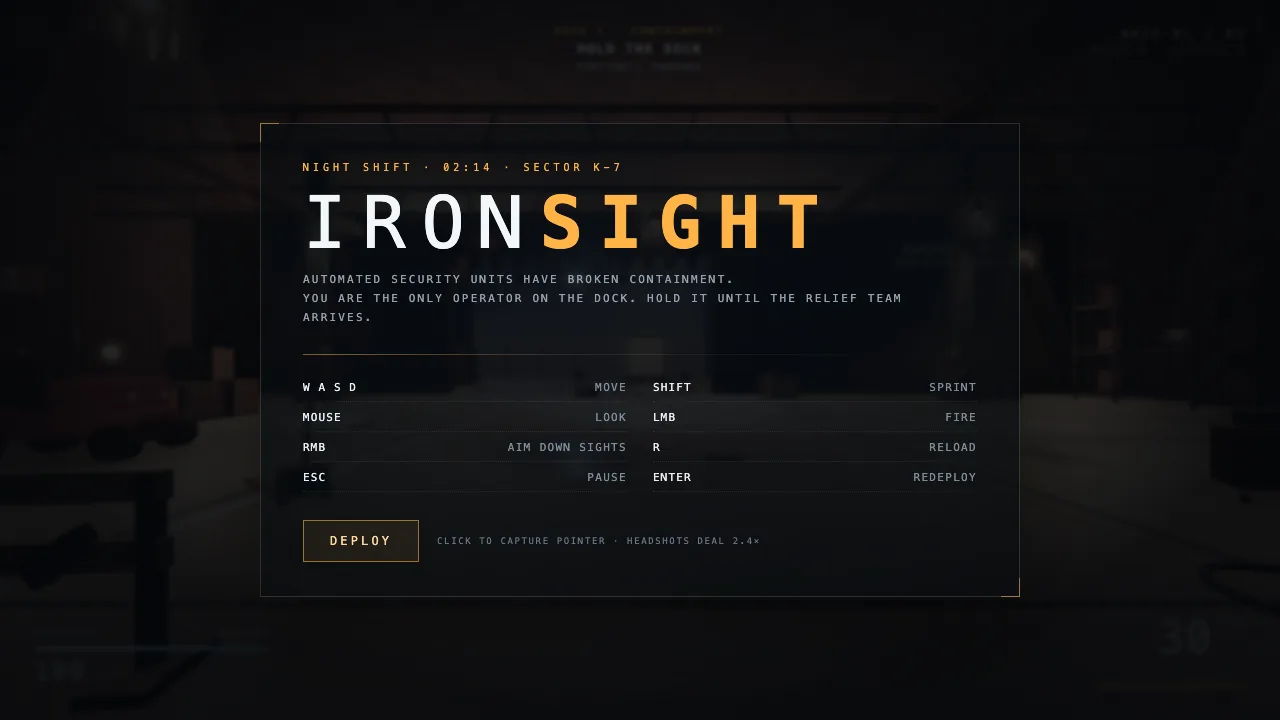
The look gate was green. The first minute was not a game.
The run spent its rounds on exposure, albedo, materials and density. The frame improved; the product did not. There was no second enemy role, no second tool, no objective chain, no settings, no save, no touch and no title key art. The HUD bled through the title card.
That is not a model failure. It is a gate failure. The acceptance command only asked whether the loop closed and the frame matched a profile. It never asked whether the thing was a finished product.
The next generation made the product a gate. The look gate moved last, and the content budget moved first.
03The second generation
318 KB,
eight green gates.
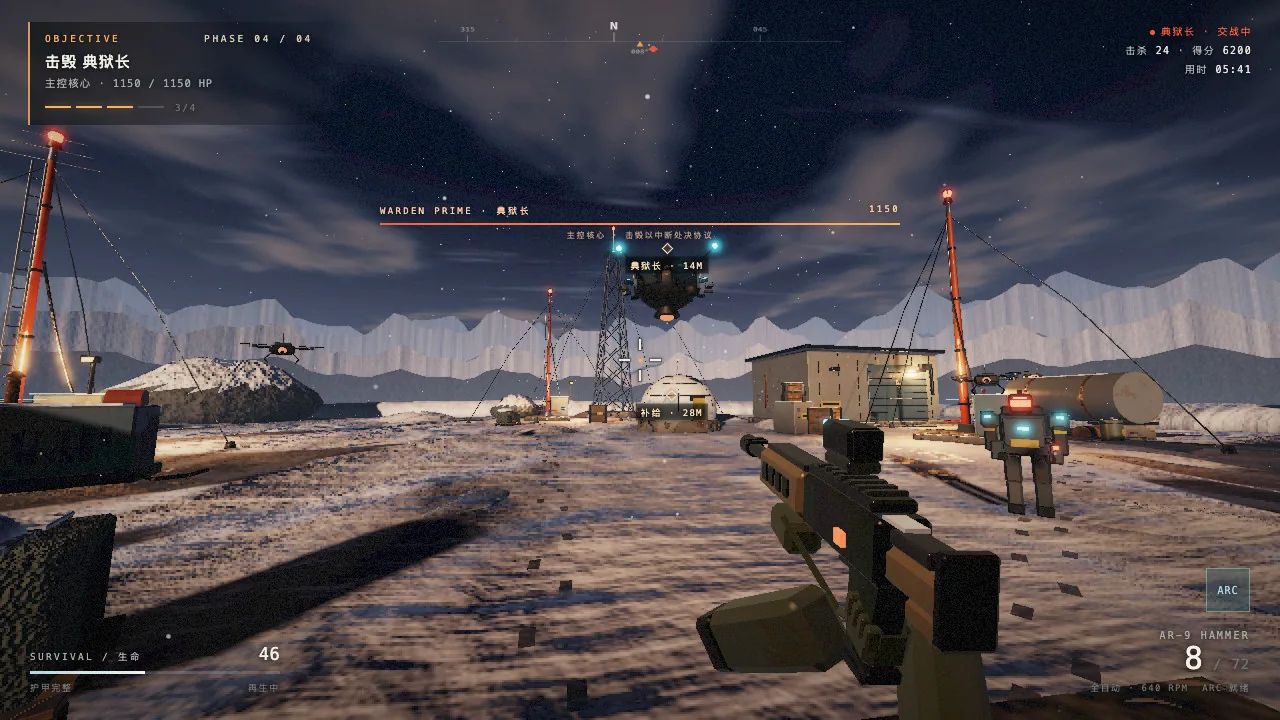
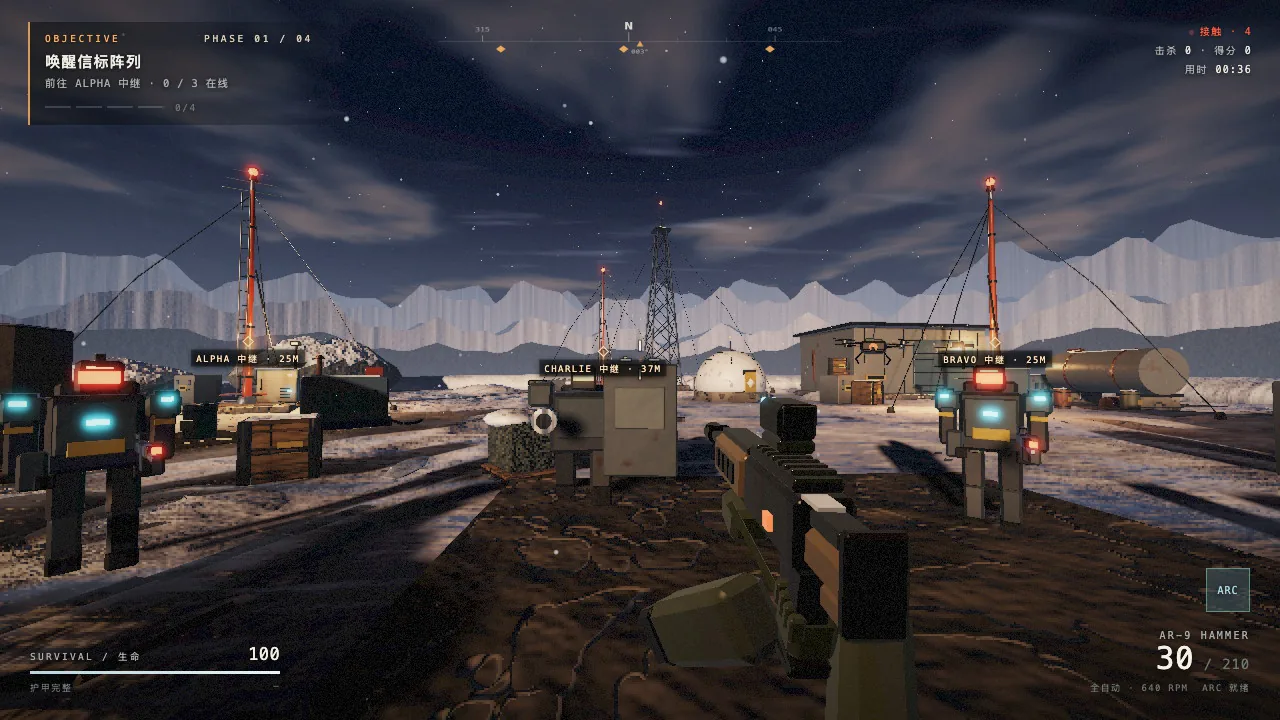
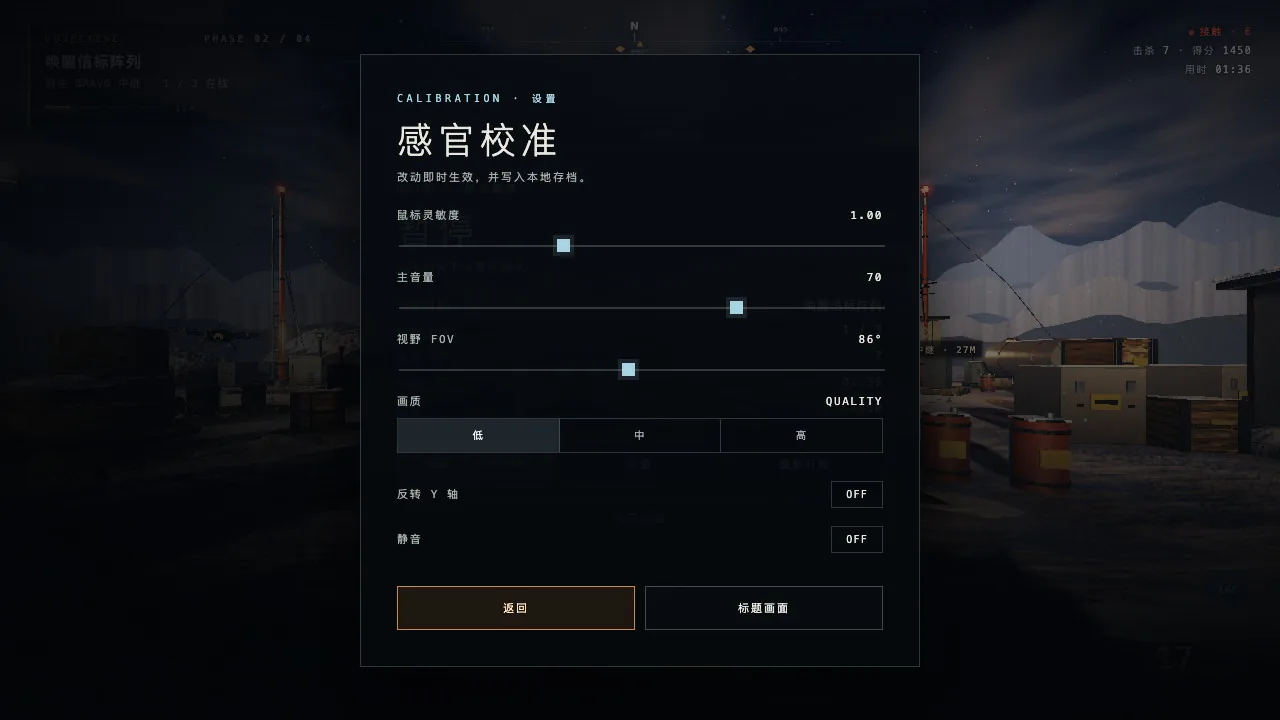
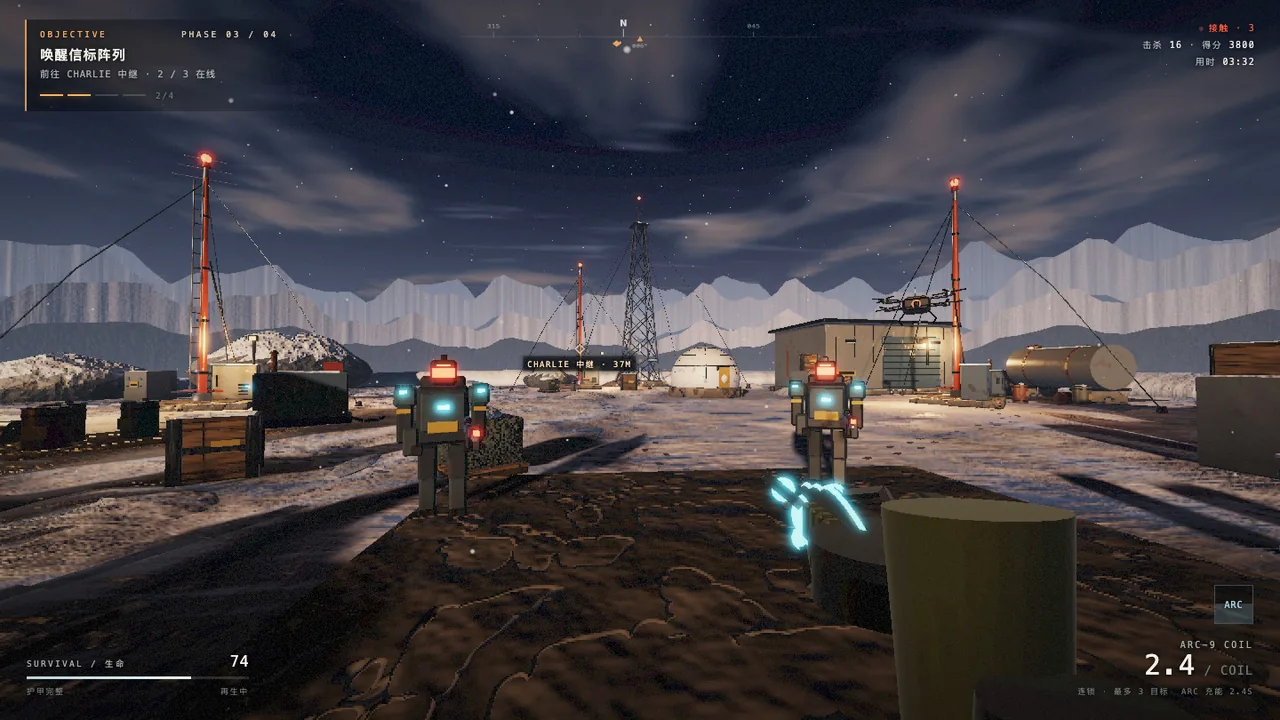
Black Ice is a raw WebGL2 build, not three.js. It is smaller because it carries less runtime, not because it hides assets. Four hostile roles, a boss, two tools, a four-beat objective chain and a full shell.
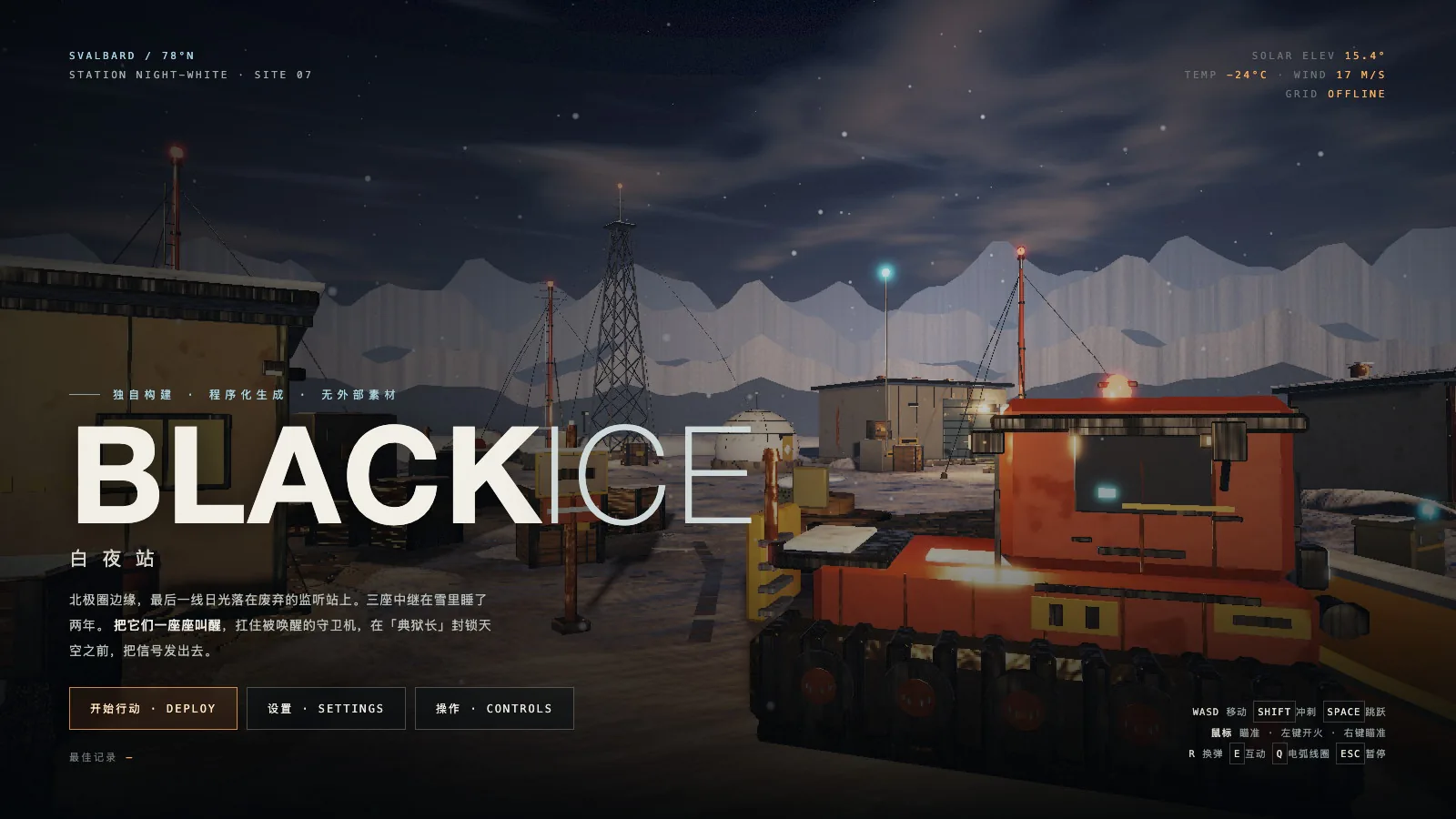
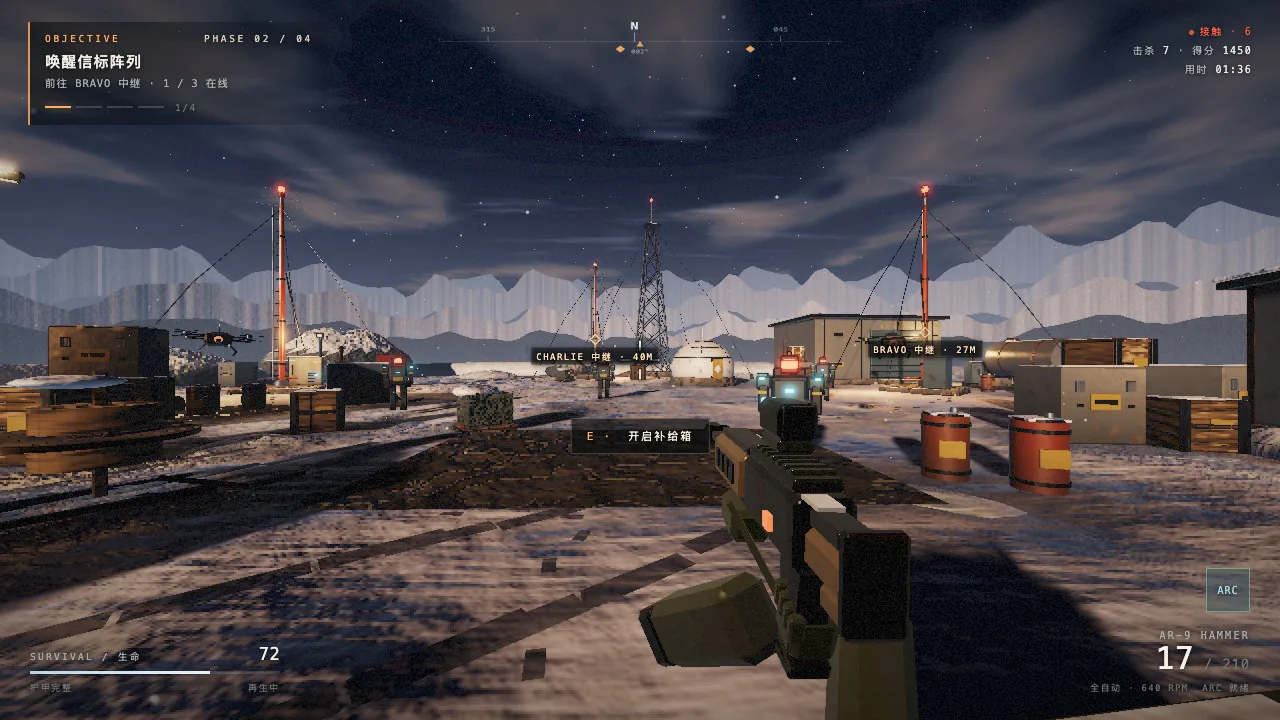
| Build | Harness | Size | Calls / tris / lights | Content | Gates |
|---|---|---|---|---|---|
| Neon Breach | none | 304 KB | 815 / 41k / — | 5 waves · 4 roles + boss · grenade, shield, radar | — |
| Ironsight | skill v1 | 1.50 MB | 484 / 181k / 18 | 3 waves · 1 role · 1 gun · no shell | 6/6 |
| Black Ice | skill v2 | 318 KB | 163 / 127k / 12 | 4 roles + boss · 2 tools · 4-beat chain · full shell | 8/8 |
| Saltline | — | 1.42 MB | — | Reference: one map, a few enemies, deep surface system | — |
04What changed
The gate moved
before the frame.
Four changes turned the green-but-thin run into a game. None of them was a new post-processing parameter.
01 / PRODUCT
A shell is not chrome.
Title, settings, pause, save, touch, lost, won. The title is key art with the HUD hidden. Settings and the best run persist. The first minute is judged before the lighting.
product gate · mobile gate02 / CONTENT
Breadth beats one more shader.
Four roles with distinct silhouettes, a boss with phases, two tools with different answers, and a four-beat objective chain. A wave counter with a new colour is not a second role.
content budget03 / PLAYTEST
The page owns its loop.
A portable selftest or plan drives win, loss, named cause, visible consequence and restart. No coordinates in the gate. The boss-death deadlock was found by driving the loop, not reading the counter.
playtest04 / ART DIRECTION
Do not default to night rain.
The first generation inherited the reference's night/industrial look. Black Ice chose an arctic dusk: a low sun, blue snow bounce, warm windows, a white-out horizon. The direction is a first-class decision, not a default.
Step 2 brief · look gate05What the gates caught
The failures
that look fine.
The useful defects are not always visual. These came from the build log; each one is a reason the gate exists.
DEFECT / 01
Shader precision, FXAA noise.
sampler2DShadow had no precision qualifier; the FXAA pass was missing the shared noise function. The world and sky shaders failed to compile. The frame was almost black. Fixing exposure would not have helped.
DEFECT / 02
The snowcat exploded.
The transform stack was unbalanced: every at() had no matching done(), so parts inherited an accumulated offset. The fix was a rewrite around a rotation-only helper, not a material.
DEFECT / 03
The gun filled the screen.
The first-person weapon occupied 40% of the lower right, the crosshair was invisible and a crate blocked half the frame. The fix was scale, position and composition — the kind of thing a hero still can hide.
close camera · compositionDEFECT / 04
The boss could not lose.
The death hook set boss.dead = true before the victory timer was queued. Killing the boss worked; the run never ended. The playtest found it because it drove the loop to a win.
06The honest limits
What this
does not prove.
Black Ice is not a cheaper Saltline. It is a smaller game made under a different constraint, with a different look. The comparison is about production discipline, not pixel parity.
IT IS SMALLER
318 KB means fewer assets, not a better compressor.
Raw WebGL2 carries less runtime than inlined three.js. The world is one arctic outpost, not a port with a ship, sea and skyline. Density is lower. That is a scope decision, not a win.
IT IS NOT PHOTOREAL EVERYWHERE
Stylized realism, not a photograph.
The snow, silhouettes and lighting carry the frame. Character models and props are still code-built primitives. A close camera can find the seams; the gates do not hide them.
IT NEEDS A HUMAN EYE
The eye veto still exists.
A noise-based cloud layer can raise a sky metric and read as television static. If a change raises the number and looks worse, the number is wrong. The skill says so explicitly.
The final build
Play it before you read another number.
Read next
The city-kart case.
The opposite result: a no-skill control that is already a complete game, and a skill build that adds the product layer. The verdict is conditional, not automatic.